Same Day Service
Collect & Deliver Service
Mobile Service Available
Same Day Service
Collect & Deliver Service
Mobile Service Available
Have you been told your alloy wheel is cracked? Is your tyre repeatedly losing pressure with no obvious puncture? Or have you damaged a wheel after hitting a pothole?
DCA Wheel Refurbishment Ltd provides professional cracked alloy wheel repair at our Tamworth workshop. We assess the crack first to determine whether the wheel is suitable for repair before carrying out TIG welding, reshaping and leak testing.
Our Cracked Alloy Wheel Repair service may be suitable if:
We also work with trade customers who need reliable wheel repairs and clear communication.
Professional Alloy Wheel Welding Repair Process (TIG Welding)
A cracked alloy wheel needs to be properly assessed before any repair is carried out.
We first check the location and extent of the crack to determine whether the wheel is suitable for repair. If it is, we prepare the damaged area, repair it using TIG welding and then test the wheel for leaks.
We start by carefully inspecting the wheel and the damaged area.
We look at where the crack is, how large and deep it is, whether it goes all the way through the wheel and whether there are any other signs of damage.
The tyre, valve and tyre pressure sensor are removed so we can properly access the damaged area.
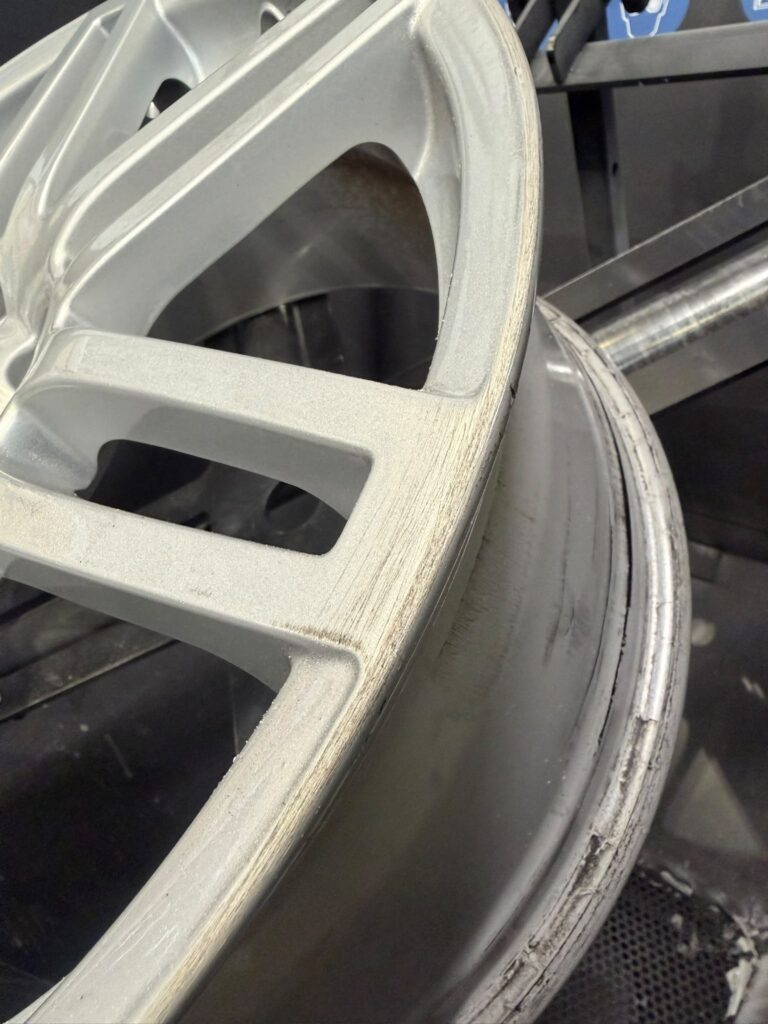
We then clean around the crack, removing paint, corrosion, brake dust and other contamination.
This gives us a clean surface to work with before the repair begins.
The damaged area is carefully opened and prepared along the crack.
This allows the repair to reach through the damaged area rather than simply covering the crack on the surface.
Before welding, the wheel is gradually heated to prepare the aluminium for the repair.
This helps reduce stress on the metal and allows the welding process to be carried out more effectively.
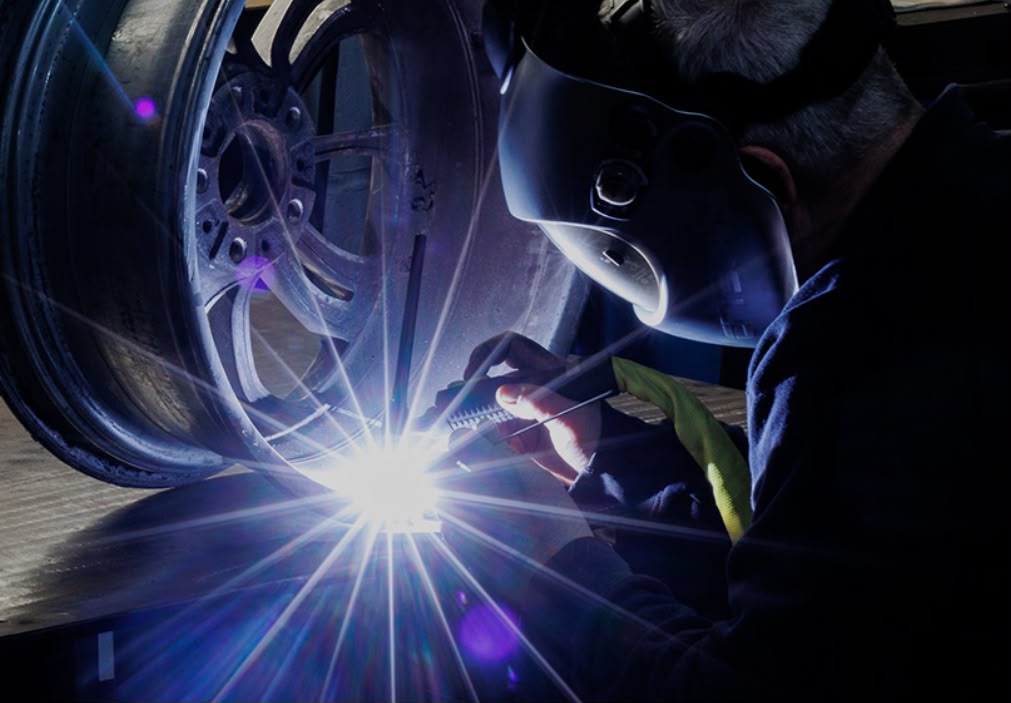
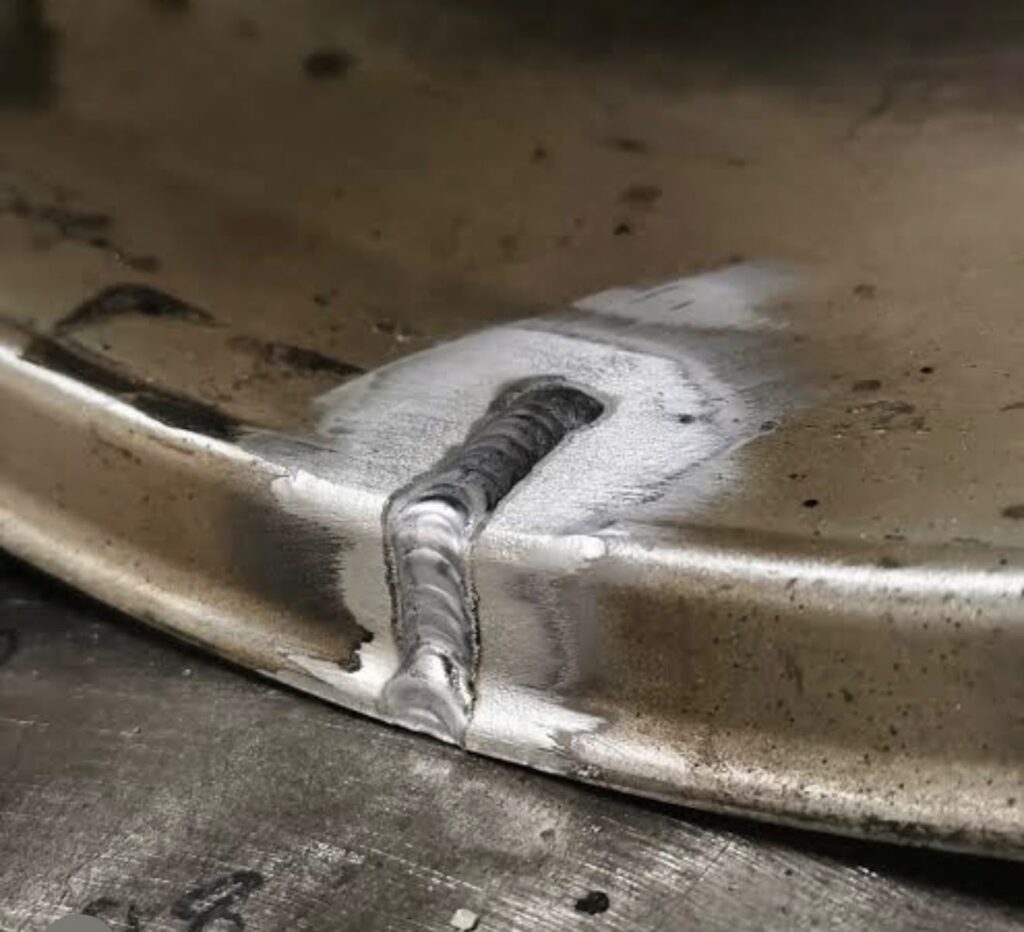
The crack is repaired using TIG welding, a controlled welding method used for aluminium alloy wheel repair.
The damaged area is carefully welded through the prepared section rather than simply applying a surface patch.
Once the welding is complete, we allow the wheel to cool naturally.
We don’t rapidly cool it with water or other methods, as sudden temperature changes can affect the repaired area.
Once cooled, the welded area is carefully smoothed and reshaped to restore the profile of the repaired section.
We also check the wheel again for any other issues that may need attention.
The tyre is refitted and inflated before the wheel is tested for air leaks.
The wheel is submerged in water so we can check that air isn’t escaping from the repaired area.
You get a wheel that has been professionally assessed, prepared, TIG welded, reshaped and leak tested.
Not every cracked wheel should be repaired. We’ll assess the damage first and only proceed when we consider the wheel suitable for repair.
Every wheel is assessed individually before we decide whether to proceed with a repair.
A cracked alloy wheel has already suffered structural damage before it reaches us. Welding repairs the damaged area, but the repaired wheel should not be considered identical to a new or undamaged wheel.
Not every crack is suitable for welding. We’ll inspect the location and extent of the damage before proceeding and let you know if we don’t consider the wheel suitable for repair.
If we identify additional damage during the repair, we’ll discuss this with you before carrying out any additional work.
See how a cracked alloy wheel is prepared, TIG welded, reshaped and tested as part of DCA’s professional repair process.


A cracked wheel can sometimes cause repeated or slow tyre pressure loss, particularly when no obvious puncture can be found. A crack may also be discovered during a tyre change or wheel inspection. We’ll inspect the wheel to confirm the cause before recommending a repair.
No. Whether a crack can be repaired depends on its location, size, condition and any other damage to the wheel. Some cracks, particularly those affecting critical areas of the wheel or wheels with extensive previous damage, may not be suitable for welding. We’ll inspect the wheel before proceeding.
Yes. After the repair, the tyre is refitted and inflated before the wheel is tested for air leaks. We submerge the wheel in water to check that air isn’t escaping from the repaired area.
No. A welded wheel has previously suffered structural damage and should not be considered identical to a new or undamaged wheel. Our repair process is designed to repair the crack and the wheel is leak tested afterwards, but we’ll always recommend replacement if we don’t consider a wheel suitable for repair.
Yes, if you’d also like the cosmetic finish restored, we can discuss the appropriate refurbishment service with you. Refurbishment is separate from the cracked wheel repair itself, so we’ll explain the options and any additional cost when quoting.
Invoice provided. Bank transfer, cash, debit and credit cards accepted.